RV Water Pump Replacement Cost: Replacing an RV water pump typically costs $100 to $400 for a standard replacement, including the pump and professional labor. However, the final bill can be higher if your RV has a difficult-to-access pump, specialized plumbing, electrical problems, or a premium water pump.
For many RV owners, replacing the pump is a manageable repair. The key is determining whether the pump has actually failed or whether a simpler issue, such as a clogged filter, blown fuse, air leak, or empty freshwater tank, is causing the problem.
This guide explains RV water pump replacement costs, labor charges, pump types, common warning signs, and practical ways to avoid unnecessary repair expenses.
How Much Does RV Water Pump Replacement Cost?
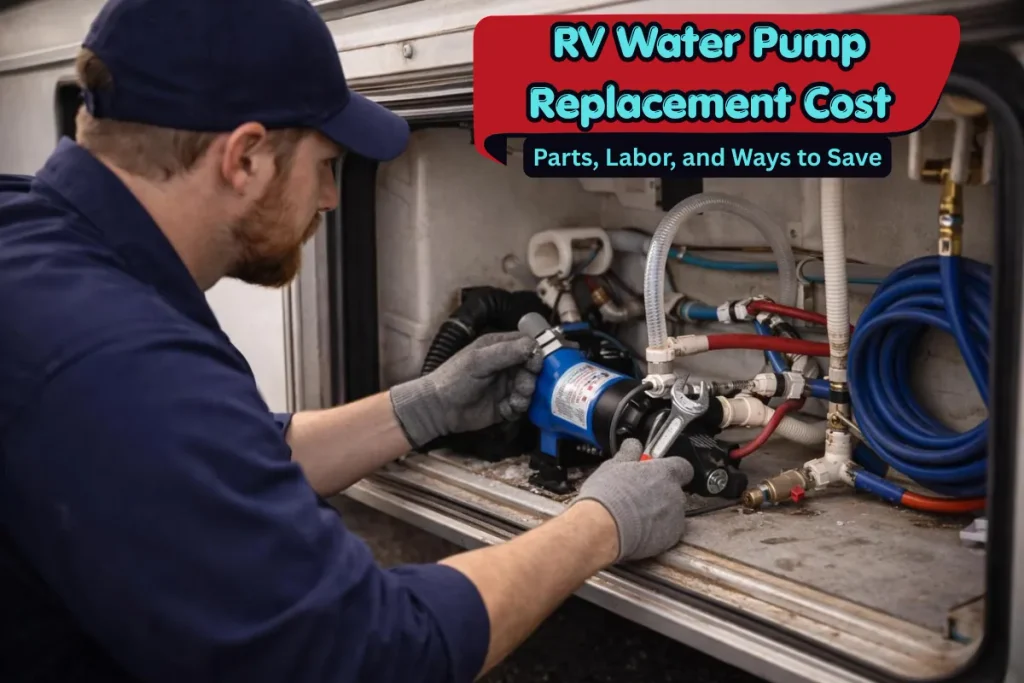
The total cost depends on the pump’s price, the complexity of the installation, and whether additional parts are needed.
| Replacement expense | Typical cost (USD) |
|---|---|
| Basic RV water pump | $40–$100 |
| Mid-range replacement pump | $80–$180 |
| Premium or higher-capacity pump | $150–$300+ |
| Professional labor | $75–$200 |
| Small fittings, clamps, and connectors | $10–$40 |
| Typical total replacement | $100–$400 |
| Complex replacement or upgraded system | $400–$600+ |
These are general budgeting estimates for the U.S. market, not a live repair-shop quote. Actual prices vary by RV model, pump specification, location, and labor rate.
A straightforward replacement may cost less than $150 if you purchase an affordable pump and install it yourself. An RV repair shop may charge more when the pump is behind cabinetry, under a bed, inside a crowded utility compartment, or connected to a customized plumbing system.
Important: Ask whether the estimate includes the pump, installation, fittings, diagnostic time, and any shop or service-call fees. A low advertised labor rate does not always reflect the final invoice.
RV Water Pump Replacement Cost by Service Type
Not every RV water pump problem requires a complete replacement. Compare the likely costs before approving a repair.
| Service | Estimated total cost |
|---|---|
| Clean or replace pump strainer | $50–$115 |
| Replace pressure switch or related component | $95–$180 |
| Repair diaphragm or check valve | $100–$250 |
| Replace standard 12V water pump | $185–$350 |
| Install a premium or quieter pump | $250–$450 |
| Replace a pump damaged by freezing | $295–$550+ |
These are approximate U.S. repair estimates. Actual prices depend on the failure, parts availability, and whether the technician charges separately for diagnosis or travel. Recent repair-cost guides place many standard replacements in the $185–$550 range, depending on the service provider and installation requirements.
RV Repair Lab
+2
When is repair cheaper than replacement?
A repair may be the better choice when the pump is relatively new and has one isolated problem.
For example, a clogged inlet strainer can restrict water flow even when the motor works properly. A faulty pressure switch can prevent normal cycling, while a damaged connection can allow air into the suction line.
Replacing the entire pump makes more sense when:
- The pump housing is cracked or leaking.
- The motor has failed or repeatedly overheats.
- Internal components are badly worn.
- The pump has multiple faults.
- A repair kit and labor cost nearly as much as a suitable replacement.
Ask the technician to identify the failed component before authorizing a complete pump replacement.
What Affects the Cost of Replacing an RV Water Pump?
Several factors can make two otherwise similar repairs cost different amounts.
1. Pump brand and quality
A basic replacement pump usually costs less than a premium model designed for quieter operation or more consistent water pressure. Common brands include SHURflo and Flojet.
A budget pump may be sufficient for a small travel trailer with modest water demand. A larger motorhome or RV used frequently for extended trips may benefit from a higher-quality model.
Do not choose a pump based on price alone. Compare its flow rate, shutoff pressure, voltage, current requirements, mounting dimensions, and plumbing connections.
2. RV type and pump accessibility
The pump may be easy to reach in one travel trailer but hidden behind cabinetry or a removable floor panel in another.
A simple installation can take around an hour. Removing panels, modifying brackets, replacing damaged hoses, or repairing wiring can add labor time.
Before requesting a quote, tell the repair shop your RV’s make, model, and year. If possible, provide a photo of the existing pump and its connections.
3. Mobile RV service versus a repair shop
A mobile RV technician can replace the pump at your home, storage facility, or campground. This is convenient if your RV cannot be moved easily, but travel and dispatch charges may increase the bill.
A repair shop may be less expensive when you can bring the RV in yourself. However, compare the complete quote rather than assuming shop service is always cheaper.
4. Additional plumbing or electrical repairs
A replacement pump will not solve every water-system problem. A technician may discover a cracked fitting, corroded wire, blocked filter, damaged pressure switch, or frozen plumbing component.
Ask for approval before any additional work begins. This helps prevent a straightforward pump replacement from turning into an unexpectedly expensive repair.
Signs Your RV Water Pump Needs Replacement
The pump runs, but no water comes out
The pump may have lost its prime, the freshwater tank may be empty, or the inlet filter may be blocked. If these issues are ruled out, internal pump damage is possible.
Water leaks around the pump
Loose fittings may be repairable, but a cracked pump housing or damaged internal seal may require replacement. Turn off the pump and investigate leaks promptly.
Unusual noise or vibration
Some vibration is normal. Excessive rattling may result from loose mounting screws, rigid plumbing connections, trapped air, or worn pump components.
The pump keeps switching on and off
If every faucet is closed and the pump continues cycling, the system may have a leak, a faulty check valve, or a pressure-control problem. Do not automatically assume the pump itself has failed.
A quick diagnostic checklist before spending money
Check these items before booking a replacement:
- Confirm that the freshwater tank contains enough water.
- Check the pump’s fuse and 12-volt power supply.
- Inspect the inlet strainer for debris.
- Check for loose connections and visible leaks.
- Make sure the winterization valves and other plumbing valves are in their correct positions.
- Listen to the pump and observe whether it builds pressure and shuts off normally.
Disconnect power before handling wiring, and relieve water pressure before opening plumbing connections. If you find damaged wiring, persistent leaks, or signs of overheating, arrange a professional inspection.
Can You Replace an RV Water Pump Yourself?
Yes. A standard 12-volt RV water pump can often be replaced by an owner with basic plumbing and electrical skills. A straightforward DIY job may take approximately 30–90 minutes, depending on access and the pump’s connections.
Tools and materials you may need
- Replacement pump compatible with your RV
- Basic screwdrivers and wrenches
- Suitable replacement fittings or hose connectors
- Towels and a container to catch water
- Manufacturer-specified fuse or electrical connectors, if needed
Basic replacement process
- Turn off the pump and power. Switch off the pump, disconnect its power supply as directed by the RV manual, and relieve water pressure.
- Locate and document the connections. Take a photo of the existing wiring, inlet hose, outlet hose, and mounting arrangement.
- Remove the old pump. Catch any remaining water, disconnect the hoses and wiring, and remove the mounting screws.
- Install the replacement. Match the required voltage, fuse protection, flow rate, pressure rating, plumbing fittings, and mounting requirements. Install the inlet strainer and suitable flexible connections as specified by the manufacturer.
- Restore power and test. Refill the freshwater tank, open a faucet as directed by the pump manual, and allow the pump to prime. Check every connection for leaks and confirm that the pump builds pressure and shuts off normally.
Follow the pump and RV manufacturers’ instructions rather than relying on a generic installation procedure. Incorrect wiring, unsuitable fittings, and inadequate freeze protection can damage the new pump.
bcf.com.au
+1
If the installation requires electrical troubleshooting, modified plumbing, or work on an unfamiliar system, hiring an RV technician is usually the safer option.
How to Choose the Right Replacement RV Water Pump
The cheapest pump is not always the best replacement. A compatible pump should meet your water system’s requirements without creating excessive pressure, electrical load, or noise.
Check the flow rate
Flow rate is measured in gallons per minute (GPM).
- Around 3.0 GPM: Often suitable for standard travel trailers and basic water use.
- Around 3.5–4.0 GPM: May suit larger RVs or owners who want stronger flow.
- Above 4.0 GPM: Consider only when your plumbing system and manufacturer specifications support it.
These are general selection examples, not universal RV size requirements. Higher flow does not automatically mean better performance if your plumbing, fixtures, or water supply cannot support it.
Check the pressure rating
Compare the replacement pump’s shutoff pressure with the original pump and the RV plumbing specifications. A higher pressure rating is not necessarily an upgrade if it exceeds what your system is designed to handle.
Consider noise and power consumption
If the existing pump is noisy, look for a model designed to reduce vibration or provide smoother pressure delivery. Also compare electrical current draw, fuse requirements, mounting arrangements, and warranty coverage.
A premium variable-speed pump may be worthwhile for frequent RV travelers, but a compatible standard pump is often sufficient for occasional camping.
How to Save Money on RV Water Pump Replacement
You can reduce the total repair bill without compromising the reliability of your water system.
1. Diagnose the fault first. Check the water supply, fuse, strainer, and visible plumbing connections before purchasing a pump.
2. Compare the installed price. Request quotes from at least two RV repair providers. Ask for separate parts, labor, travel fees, and diagnostic charges.
3. Buy a compatible replacement. Matching the existing pump’s specifications can avoid extra expenses for adapters, wiring changes, or mounting modifications.
4. Avoid unnecessary upgrades. If the original pump meets your needs, a premium model may offer little practical benefit.
5. Maintain the pump properly. Clean the inlet strainer according to the manufacturer’s instructions, inspect connections, and address leaks promptly.
6. Winterize the system correctly. Freezing water can crack pump housings and damage plumbing. Follow the RV manufacturer’s winterization procedure and use only products approved for RV potable-water systems.
Final Verdict
For most RV owners, budget around $200–$400 for a straightforward water pump replacement, while keeping some flexibility for higher labor charges or additional repairs. A more complex installation can exceed $500.
Before replacing the pump, confirm that it is actually defective. Checking the fuse, freshwater supply, inlet strainer, and plumbing for leaks can prevent an unnecessary purchase. If replacement is necessary, match the new pump to your RV’s specifications and test the system carefully before your next trip.
That approach helps you control repair costs while restoring reliable water pressure for everyday RV use.